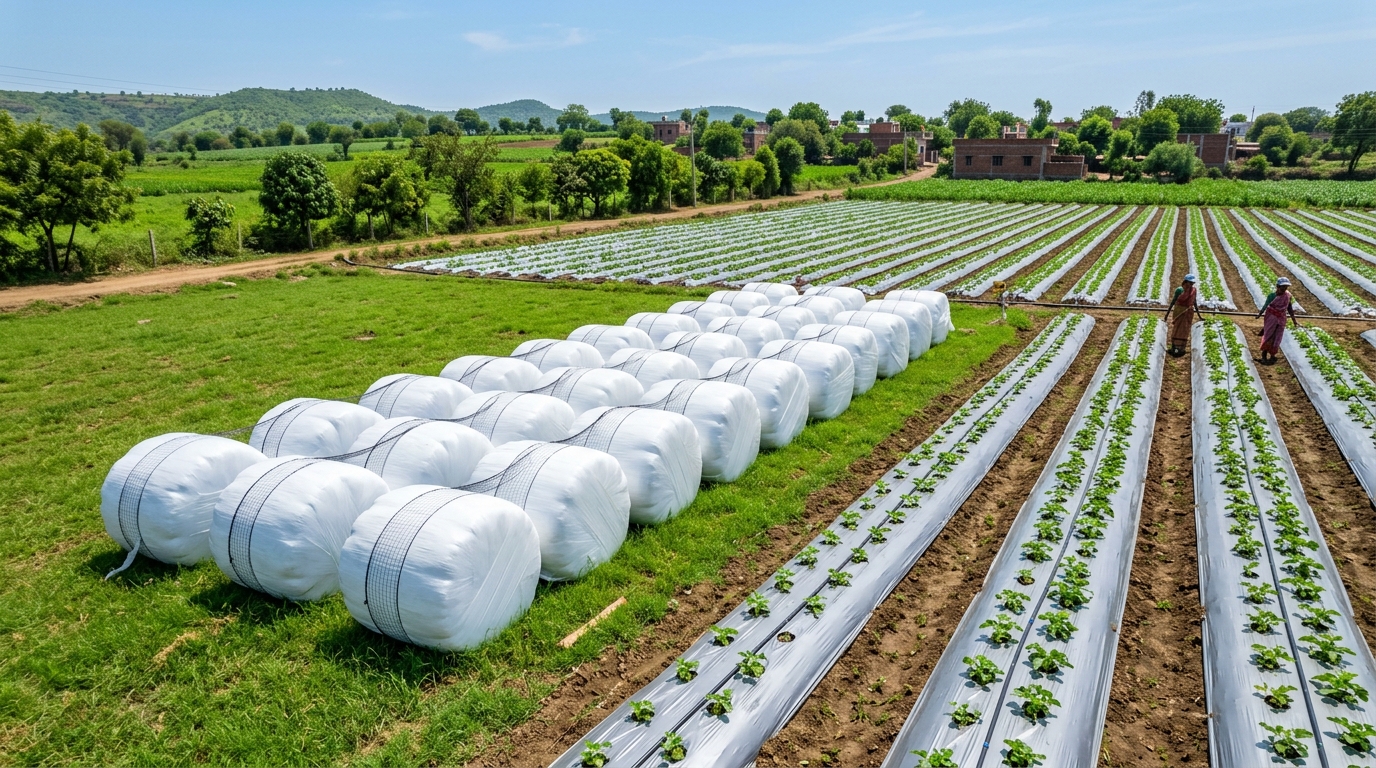
Indian agriculture and dairy farming face extreme climate volatility: scorching summer heat waves, unpredictable monsoon dry spells, and seasonal fodder shortages that cripple cattle milk yields. In response, modern commercial farmers, horticulture growers, and dairy cooperatives across Gujarat, Punjab, Maharashtra, and Karnataka are adopting specialized agricultural polymers to protect crops and livestock nutrition.
Two critical polymer technologies lead this agricultural revolution: UV-Stabilized Silage Stretch Film for hermetic fodder conservation, and Silver-Black Agricultural Mulch Film for microclimate optimization and water conservation. Here is an agronomic breakdown of how they work and how to select the right grades.
1. Silage Stretch Film: Solving the Seasonal Dairy Fodder Crisis
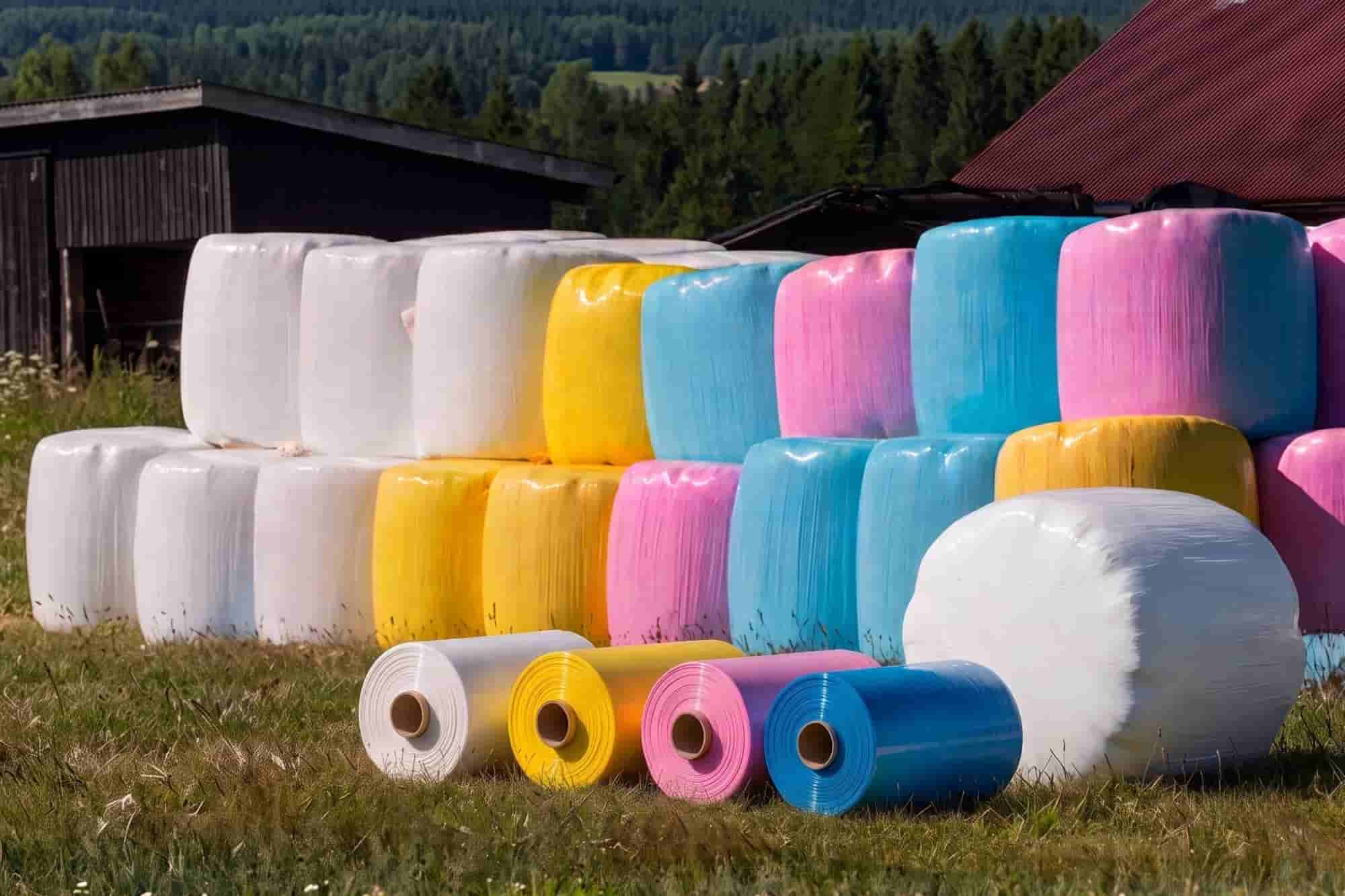
Green fodder (corn/maize, sorghum, alfalfa, Napier grass) is harvested at peak nutritional maturity. Traditionally, farmers dried grass into hay, losing up to 40% of digestible crude protein and soluble sugars. With automated round balers and multi-layer LLDPE silage stretch wrap, green fodder is immediately compacted and sealed in field bales:
- Anaerobic Lactic Acid Fermentation: Hermetically sealed bales rapidly consume remaining oxygen, triggering beneficial lactic acid fermentation that drops pH below 4.2 within days, preserving nutritional value indefinitely.
- Zero Spoilage from Mold & Yeast: High-barrier polymer layers prevent oxygen re-entry and water seepage during monsoon downpours.
- 18-Month UV Degradation Protection: Formulated with advanced hindered amine light stabilizers (HALS) that resist high UV indexes without embrittlement or tearing.
2. Agricultural Mulch Film: Engineering the Soil Microclimate
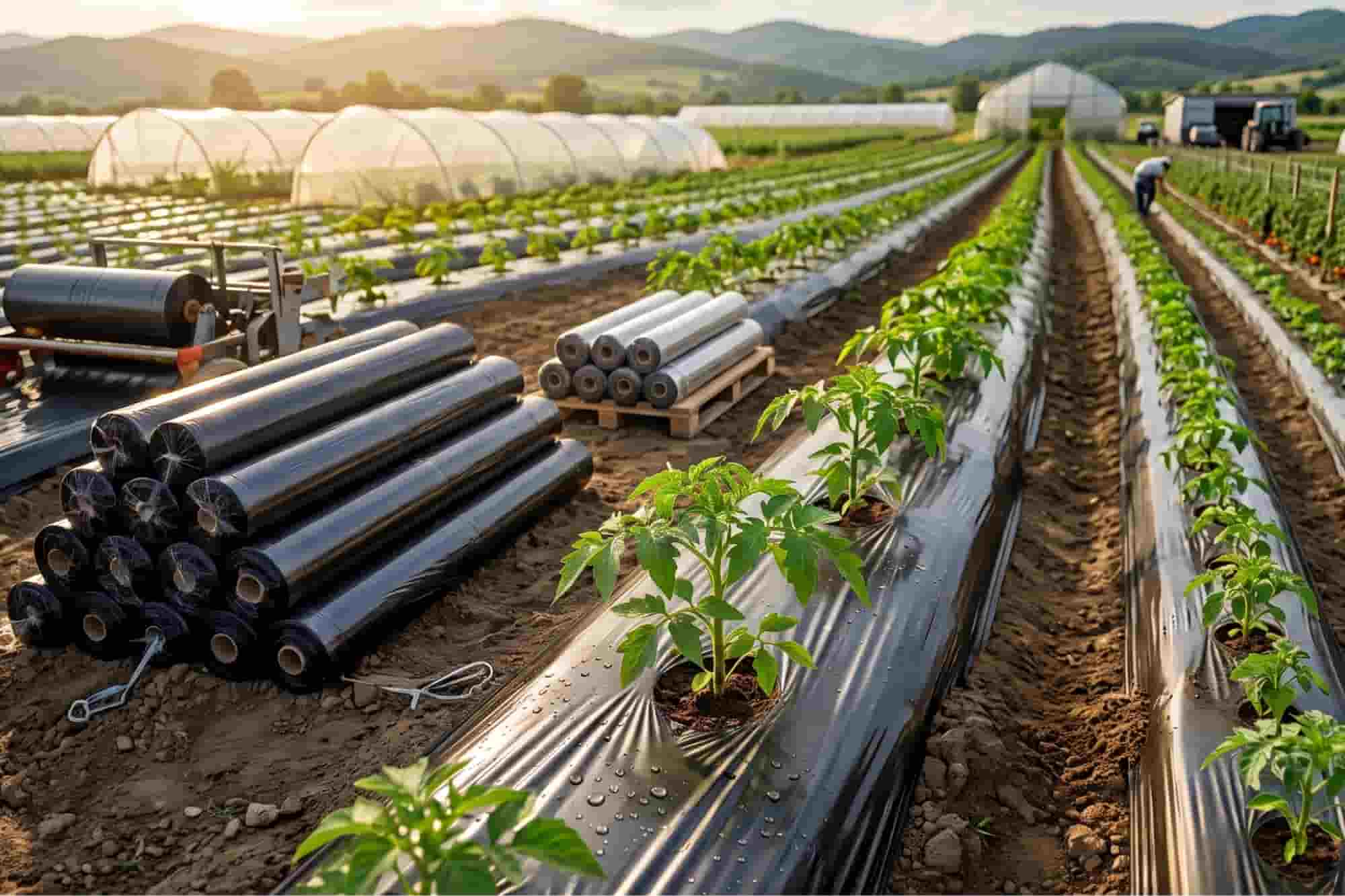
Laying thin polyethylene film over raised soil beds fundamentally alters root growth physics:
| Agronomic Characteristic | Silage Stretch Wrap | Silver-Black Mulch Film |
|---|---|---|
| Primary Agricultural Objective | Green fodder nutrient preservation | Soil temperature, weed & water control |
| Co-Extrusion Technology | 3 or 5 Layer High-Barrier Co-Ex | Multi-layer dual-color extrusion |
| Oxygen Barrier Rating | <10 cc/m²/24hr (Strict Anaerobic) | Permeable / Breathable Soil Interaction |
| Standard Thickness | 25 Microns (100 Gauge) | 20 to 50 Microns (80 to 200 Gauge) |
| UV Life Guarantee | 12 to 18 Months Outdoor Exposure | 6 to 12 Months Crop Duration |
| Target Agricultural Sectors | Dairy Farms, Cattle Feeders, Baling Units | Horticulture (Tomatoes, Chillies, Melons) |
3. The Science Behind Silver-Black Dual Color Mulch
Many growers wonder why dual-color silver-black mulch outperforms standard transparent or plain black films:
- Top Silver Layer: Reflects up to 35% of harsh sunlight back upwards. This accomplishes two crucial benefits: it cools soil by 3°C to 5°C during hot summer days, and the blinding reflected UV radiation confuses flying insect pests like aphids, thrips, and whiteflies, drastically reducing viral crop diseases.
- Bottom Black Layer: 100% opaque. By absorbing all light in the photosynthetically active radiation (PAR) spectrum, weed seeds beneath the film cannot germinate, completely eliminating manual weeding costs and herbicide runoff.
Ordering Seasonal Agricultural Rolls for Your Region?
Agola Polymer supplies farming cooperatives, irrigation distributors, and commercial balers with factory-direct bulk rates on 500mm/750mm silage rolls and custom mulch reels.
4. Sizing & Layering Rules for Optimal Agronomic Performance
- Silage Bale Wrapping Rules: Always apply a minimum of 6 layers (with 50% overlap and 55% to 70% pre-stretch). For outdoor storage exceeding 12 months in tropical heat, 8 layers are strongly recommended.
- Bale Storage Angle: Store round bales on their flat end rather than the rounded side to prevent water pooling on seam seals.
- Mulch Bed Preparation: Ensure drip lateral lines are tested and pressurized before rolling out the mulch film. Bury the film edges 10 cm deep in soil to anchor against heavy winds.
Frequently Asked Questions
Our multi-layer silage stretch film is engineered with high-concentration hindered amine light stabilizers (HALS) that provide guaranteed UV resistance for 12 to 18 months under harsh tropical sunlight, maintaining anaerobic conditions with oxygen permeability below 10 cc/m²/24hr.
The upper silver surface reflects excess thermal heat to cool the root zone in scorching weather and deters aphids/whiteflies, while the bottom opaque black layer blocks 100% of light to prevent weed growth without chemical herbicides.
Yes. We offer factory automated hole punching with customizable plant-to-plant and row-to-row spacing (e.g., 30 cm, 45 cm, 60 cm) to save substantial labor during field transplanting.